
DeSoto, TX • Dallas County • 24/7
Drywall Drying & Moisture Detection in DeSoto, TX
Drywall drying and moisture detection in DeSoto, TX means finding hidden water inside your walls with moisture meters, drying it with air movers and a dehumidifier, and checking the readings before any new drywall goes in. Call (469) 933-0245 — we answer 24/7.
The stain you see is only part of the water. Most of it hides behind the paint, in the insulation, and along the studs. We map it with meters, dry it, and prove it is dry with a final reading.
24/7 • DeSoto, TX 75115 & 75123 • About 25 km around DeSoto
What It Is
What Is Drywall Drying & Moisture Detection?
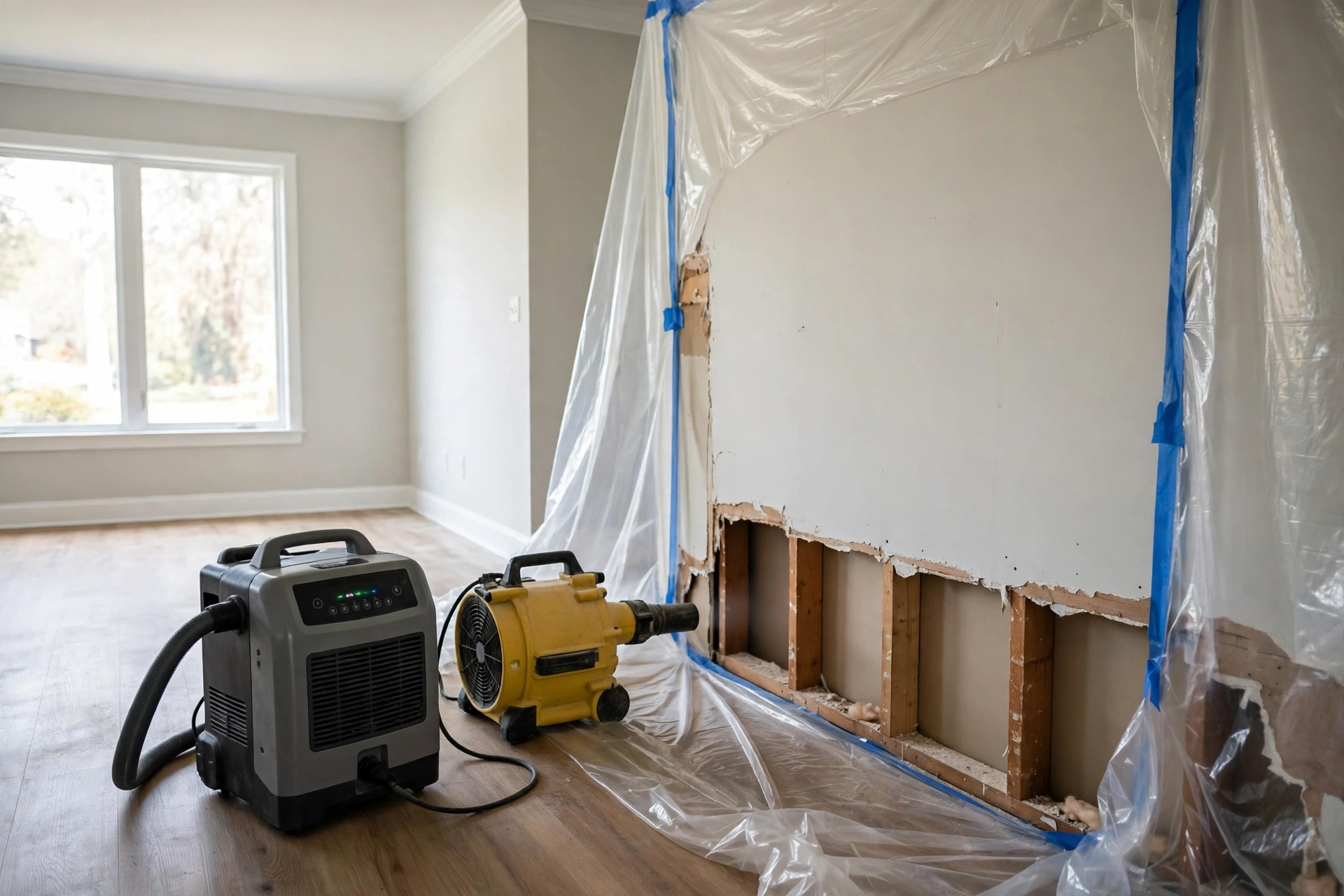
Drywall drying and moisture detection means finding where water went inside your walls, and drying it out properly — before any new drywall goes in. The stain you can see is only part of the story. Water spreads behind the paint, along studs, and into insulation, where you cannot see it.
We use two kinds of moisture meter. A pin meter has small probes that go into the board and read the moisture inside it. A pinless meter reads through the surface without holes, and it is good for scanning a large area fast. Together, they draw a map of the wet area: how far up the wall the water went, and how far sideways it spread.
We also set a dry standard: the moisture level of dry materials in the same home. The wet wall is ready when its readings match it. Touch is not enough — a wall can feel dry and still be wet inside.
Detection comes first, drying second, rebuilding last. New board over a wet wall traps moisture, and mold grows behind it.
Signs You Need It
Signs You Need Moisture Detection
If any of these sound familiar, water is probably still inside the wall, even if the leak has stopped.
- A stain that keeps coming back. You painted over it, and the stain bled through again. The wall behind it is still wet.
- A musty smell. Mold can start in 24 to 48 hours when drywall stays wet. The smell often comes before you see anything.
- Paint bubbling or peeling. Water behind the paint pushes it off the surface.
- A soft spot. The wall feels soft when you press it, even though the paint looks fine.
- You had a leak, but you never checked the wall. A burst pipe, an overflowing fixture, or a roof leak can soak a wall without leaving a clear stain.
- The floor near the wall is damp. Water at the base of the wall usually means water inside the wall too.
What’s Included
What’s Included in Drying & Detection
We do not guess. Every drying job starts with readings, and ends with readings.
- Moisture map. We scan the walls and ceilings with pin and pinless meters, and mark the wet area on the wall itself.
- Dry standard set. We take readings from dry materials in the same home, so we know what “dry” means for your house.
- Drying plan. We set up air movers and a dehumidifier, and we explain how long it should take and what we need from you.
- Wet material removed. Board and insulation that cannot be saved come out first, so air can reach the frame.
- Daily checks. We come back and check readings, move equipment if needed, and adjust until the wall is dry.
- Final reading. The wall is only ready to rebuild when the readings match the dry standard.
- Written record. Photos and readings are kept on file, which helps if you are filing an insurance claim.
Not Sure If Your Wall Is Dry? Call Now
Call now and tell us what happened.
📞 Call (469) 933-0245 NowCost
What Does Drying & Detection Cost?
These are typical U.S. ranges, not a DeSoto quote. Drying cost depends on how much water got in and how long the equipment needs to run.
| Job | Typical U.S. range |
|---|---|
| Moisture check only | $150 – $400 |
| Drying + partial drywall replacement | $350 – $1,500 |
| Drying + full room rebuild | $1,000 – $3,000+ |
| With mold involved | $2,500 – $6,000 |
What moves the price? The size of the wet area matters most, then how deep the water went. Wet insulation and extra drying days add cost. Call (469) 933-0245 for an exact quote.
Our Process
How Drying & Detection Works
Call
Call (469) 933-0245. Tell us what leaked, when it happened, and what you see now.
Detect
We scan the walls with pin and pinless meters, map the wet area, and set a dry standard from dry materials in your home.
Dry
Air movers and a dehumidifier run until the readings fall. We check every day and move equipment as needed.
Prove It Dry
We take a final reading. Only when it matches the dry standard is the wall ready to rebuild.
DeSoto, TX
Drywall Drying in DeSoto, TX
DeSoto sits 12 miles south of Dallas, in southern Dallas County, on I-35E and I-20. Most homes here are one-story and split-level brick homes built in the 1970s and 1980s, on slab foundations. North Texas humidity is high for much of the year, and that matters for drying: wet drywall dries slowly on its own, and a closed-up wall can stay damp for weeks without equipment.
We work across DeSoto, in ZIP codes 75115 and 75123, and in neighborhoods including The Meadows, Thorntree, Eagle Crest, Brandonwood, Frost Farms, Amber Terrace, Hidden Lakes Estates, and Summit Parks. The causes we see most are burst pipes, roof leaks after storms, AC drain leaks, and appliance hoses.
Related Services
Not sure which one you need? Call us.
Nearby Cities We Serve
DeSoto and nearby cities within about 25 km (15.5 miles).
FAQ
Drying & Moisture Detection — Questions We Hear in DeSoto
How long does drywall take to dry?
Usually 2 to 5 days with air movers and a dehumidifier. It depends on how much water got in, whether insulation is wet, and how much air can reach the wall. We check readings every day until the wall is dry.
Can I dry wet drywall with a household fan?
A household fan helps on the surface, but it will not dry the inside of a closed wall. Wet board and wet insulation need commercial air movers and a dehumidifier, and the wet board often needs to come out first.
What is a dry standard?
A dry standard is the moisture level of dry, unaffected materials in the same home. We compare the wet wall to a dry wall nearby. The wall is ready to rebuild when its readings match the dry standard.
Do you have to remove drywall to dry the wall?
Sometimes. If the board is soft or moldy, it has to come out. If the board is firm, we can often dry it in place with air movers. The moisture meter tells us which one it is.
How do you know the wall is really dry?
We check it with a moisture meter, not by touch. The studs, the cavity, and the board all need to read dry. Touch can lie — a wall can feel dry on the surface and still be wet inside.