
DeSoto Drywall Pros Blog • DeSoto, TX • November 6, 2026
Can You Paint Over Water Damaged Drywall in DeSoto, TX?
Can you paint over water damaged drywall? Yes, but only if the leak is fixed, the board is firm, flat, and dry, and you seal the stain with a stain-blocking primer first. If the drywall is soft, sagging, bubbling, or moldy, paint is a cover-up, not a repair. Call (469) 933-0245.
A brown stain on the ceiling or wall is the most common sign of water damage, and the first instinct is to paint over it. Sometimes that is exactly the right fix. Often it is not, and painting too soon — or painting the wrong kind of damage — wastes a weekend and leaves you with a stain that comes back, paint that peels, and mold growing where you cannot see it. This guide shows you how to tell which kind of stain you have, and what to do about each one.
24/7 • DeSoto, TX 75115 & 75123 • About 25 km around DeSoto
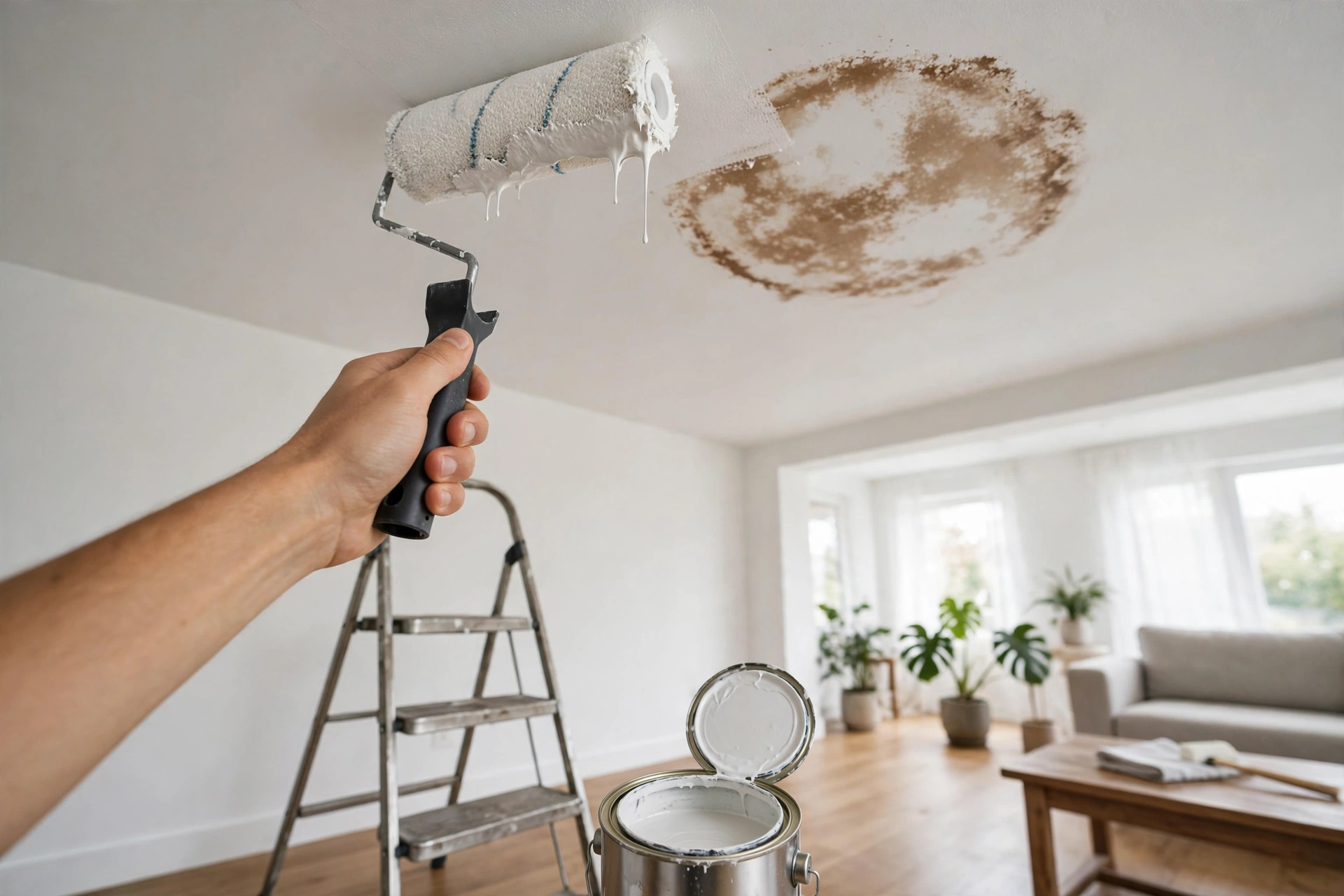
The Honest Answer
Can You Paint Over Water Damaged Drywall? It Depends on the Board
There are really three kinds of water stain, and each one needs a different fix. The trick is knowing which one you are looking at before you open a paint can.
Level 1: a dry, firm stain. The leak is fixed, the board is dry and flat, the paint is intact, and the only problem is the brown mark. This is a paint job. Clean the surface, seal the stain with a stain-blocking primer, and paint. Nobody should sell you new drywall for this. It is the smallest, cheapest fix in water damage repair, and it is the one homeowners most often get right.
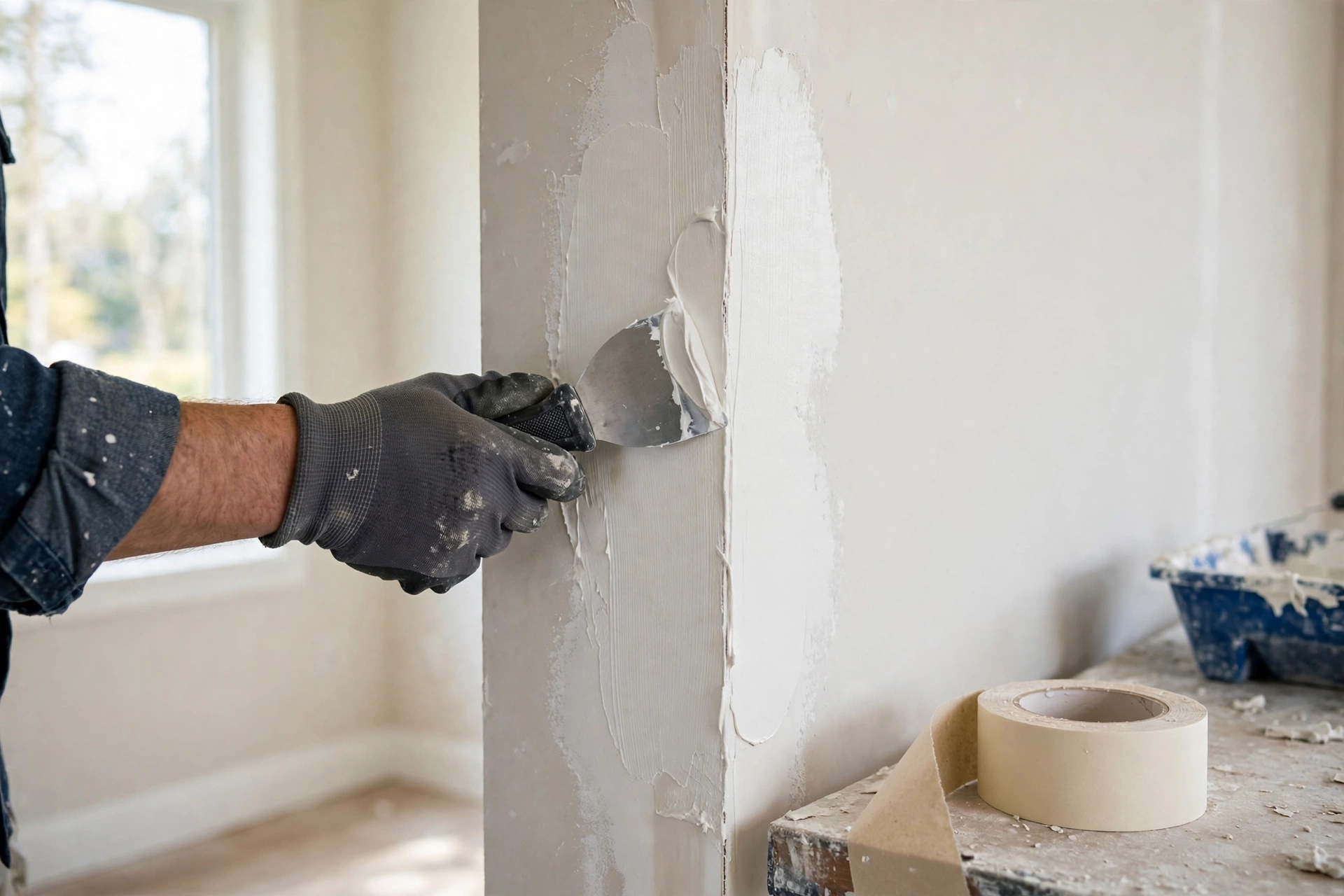
Level 2: a small soft spot or a patch of bubbling paint. The board has gone soft in one place, or the paint is blistering and peeling. This is a patch job. The soft section gets cut out, a new piece of drywall goes in, the seams are taped and mudded, the texture is matched, and then the whole area is primed and painted. Painting over it without the patch would leave a soft spot that keeps growing.
Level 3: sagging, crumbling, or moldy board. The ceiling sags, the board crumbles when you press it, or there is visible mold or a musty smell that will not go away. This is a replacement job. The damaged section comes out, the cavity is dried, and new board goes in. Paint cannot fix this. It can only hide it for a few weeks, while the damage underneath gets worse.
Most of the cost of a bad paint job is not the paint. It is the second repair. A stain painted over a still-wet board will bleed through, peel, and have to be done again — after the board underneath has had more time to grow mold. The honest rule is simple: paint is the last step of a water damage repair, never the first step.
The 5 Checks
5 Checks Before You Paint Over Water Damaged Drywall
Run through these five checks in order. If any one of them fails, stop and fix that problem first.
1. Is the leak fixed? This is the check people skip most. A stain that keeps growing, or a stain that comes back after painting, means water is still getting in. The source has to be found and fixed first — the roof, the pipe, the AC drain, the appliance hose. Painting over an active leak guarantees a repeat stain. If you are not sure where the water came from, read our guide on how to tell if drywall is wet behind the wall.
2. Is the board firm? Press the stained area gently with your thumb. Sound drywall resists. Wet drywall gives slightly, feels cool, and may hold a faint impression. If it feels soft, spongy, or crumbly, it has lost its strength and needs to come out. Do not press hard — badly damaged board can crumble or fall.
3. Is the board dry? The surface should feel dry, with no dampness and no stain that is still spreading. But the surface can lie. A wall can look dry on the outside and still be wet inside the cavity, especially with insulation behind it. A moisture meter gives a sure answer: the board should read the same as dry board elsewhere in the room. Our drywall drying and moisture detection service in DeSoto, TX checks this with pin and pinless meters.
4. Is there mold? Look for black, green, or white spots, and trust your nose. A musty, earthy smell that lingers after the area looks dry usually means mold is growing on the back of the board. Never paint over mold. Paint does not kill it, and it does not stop it growing behind the paint. The U.S. Environmental Protection Agency is clear on this point: moldy porous materials should be cleaned up and dried first, and materials that cannot be cleaned should be thrown away. You can read the guidance at epa.gov/mold. If you see mold, read our guide on how fast mold grows on wet drywall.
5. Is the surface flat and sound? Peeling paint, loose tape, or bubbling finish has to be scraped and sanded before you prime. Primer sticks to sound paint, not to loose paint. If the seams are lifting or the tape is coming off, that is a sign the board behind it moved when it got wet, and a patch is probably needed.
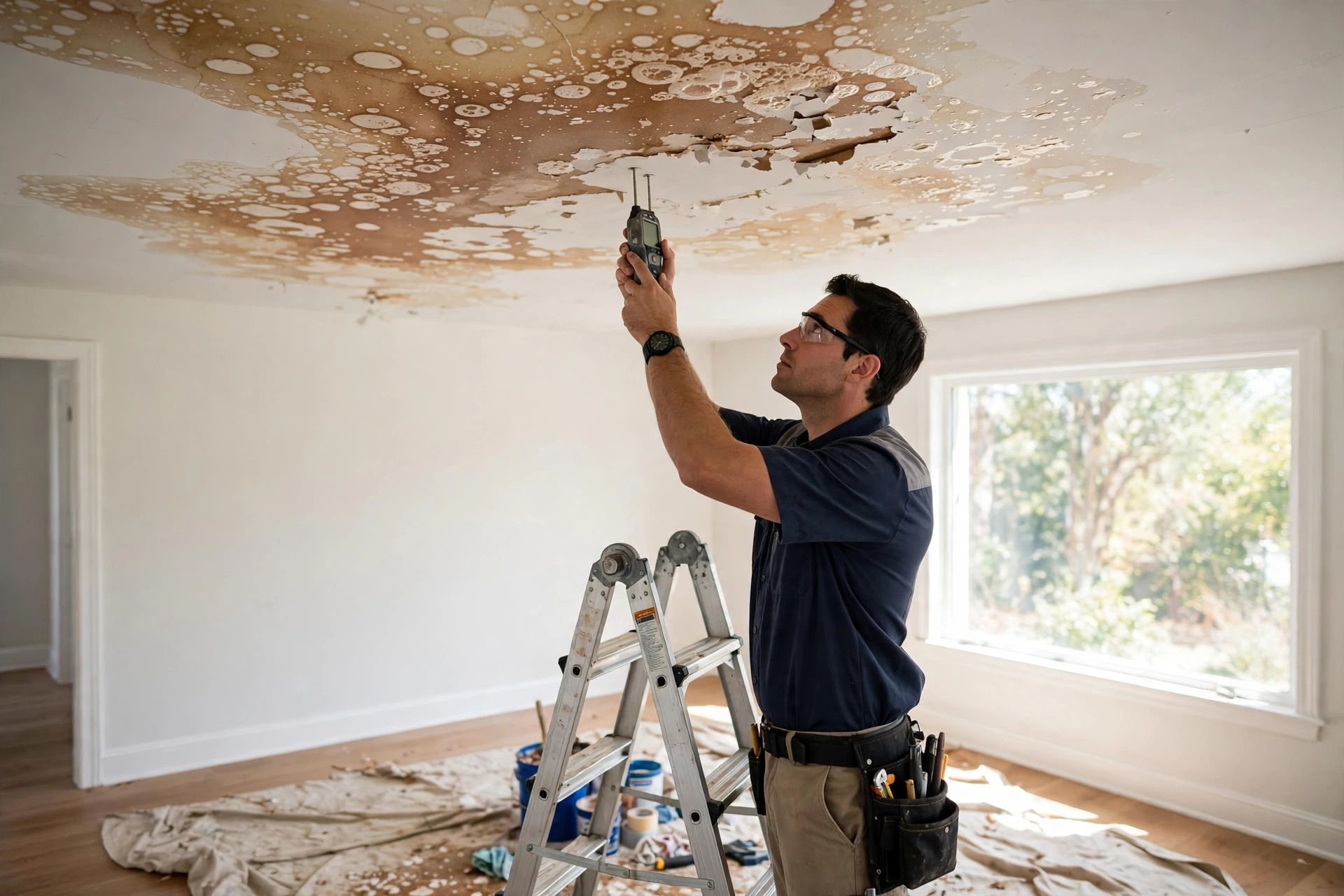
If all five checks pass, you have a Level 1 stain, and painting is the right fix. If any check fails, you have a repair job first and a paint job second. When in doubt, call (469) 933-0245 and describe what you see. We will tell you honestly whether paint is enough.
How to Paint It Right
How to Paint Over a Water Stain the Right Way
Once the five checks pass, the job itself is simple, but the order matters.
Step 1: Clean and prep. Wipe the stain with a damp cloth and let it dry fully. Scrape off any loose or peeling paint, and sand the edges smooth with 120-grit paper so the repair does not show a ridge. If the stain is on a ceiling, cover the floor below — primer drips are hard to clean off flooring.
Step 2: Seal with a stain-blocking primer. This is the step that makes the difference. Ordinary paint — even two or three coats — will not hold back a water stain. The stain is caused by minerals and tannins that dissolve in water and bleed through latex paint. A primer made for water stains, usually shellac-based or oil-based, seals the stain in. Roll it past the mark in a generous oval, 6 to 12 inches beyond the stain on every side, and let it cure fully before you paint over it.
Step 3: Paint the whole surface. For a ceiling, paint the whole ceiling plane, not just the stained spot. For a wall, paint to a natural break, like a corner or a doorway. Spot painting almost always shows, because new paint has a different sheen and tint than the paint that has been on the wall for years. Two thin coats of flat ceiling paint, or the matching wall finish, will look far better than one thick coat.
Step 4: Watch it for a week. If the stain comes back through the new paint, there is still a leak, or the board underneath was still damp. Do not add another coat and hope. Find the water first. A stain that returns after proper priming is telling you something, and it is worth listening to.
If the board failed any of the five checks, the fix is a patch or a replacement, not paint. Our ceiling water damage repair in DeSoto, TX covers the full job — cut out, dry, rebuild, and finish — and our drywall texture matching service makes the repair disappear into the rest of the ceiling or wall. A good patch should be invisible in normal light. If you can see where the repair was, the texture was not matched properly.
Mistakes
3 Painting Mistakes We Fix Most Often in DeSoto
Mistake 1: Painting before the leak is fixed. This is the most common mistake, and the most expensive. The stain comes back within days or weeks, the new paint peels, and now there are two layers of paint to strip before the real repair can start. Fix the water first. Always.
Mistake 2: Using regular paint instead of stain-blocking primer. Regular latex paint covers a water stain for a day or two, then the brown ring bleeds back through. Homeowners often add a second and third coat, then give up and call us. One coat of the right primer would have done the job. The primer costs a little more than paint, but it is the cheapest part of the whole repair.
Mistake 3: Painting over a soft or sagging ceiling. This one is dangerous, not just wasteful. A sagging ceiling is holding water, and wet drywall can drop without warning. Painting it does nothing about the weight above your head. If your ceiling sags or bulges, stay out of the room and read our guide on is a sagging ceiling dangerous after a water leak — then call (469) 933-0245 right away.
Cost
What Does It Cost: Paint, Patch, or Replace?
These are typical U.S. ranges, not a DeSoto quote. The right fix depends on the board, not the stain.
| Fix | When it applies | Typical U.S. range |
|---|---|---|
| Seal and paint | Dry, firm, flat board; stain only | $150 – $400 |
| Patch and paint | Small soft area, bubbling paint | $350 – $1,500 |
| Replace the section | Sagging, crumbling, mold | $1,000 – $3,000+ |
The cheapest fix is the right fix done once. A $150 paint job on a board that needed replacing becomes a $1,500 replacement a month later, plus the cost of the wasted paint. If you are not sure which level your damage is, call (469) 933-0245 for an exact quote. Our guide on how much it costs to replace water damaged drywall in DeSoto, TX has the full breakdown.
DeSoto, TX
Painting Over Water Damage in DeSoto, TX Homes
DeSoto sits 12 miles south of Dallas, in southern Dallas County, on I-35E and I-20. Most homes here are one-story and split-level brick homes built in the 1970s and 1980s, on slab foundations. In these homes, the most common water stains we see are on ceilings below upstairs bathrooms, and on walls behind kitchens and laundry rooms. Texas summer humidity makes drying slower than homeowners expect, so a board that looks dry on the surface can still be damp inside — another reason to check with a meter before you paint.
We work across DeSoto, in ZIP codes 75115 and 75123, and in neighborhoods including The Meadows, Thorntree, Eagle Crest, Brandonwood, Frost Farms, Amber Terrace, Hidden Lakes Estates, and Summit Parks. If you have a stain and you are not sure whether paint is enough, call (469) 933-0245 and describe it. If paint is all you need, we will tell you so — we would rather earn your trust than sell you a repair you do not need. For the DeSoto area page, see water damaged drywall repair in DeSoto, TX, or visit our homepage to see all our services. You can also read our guide on can water damaged drywall be saved in DeSoto, TX if you are weighing repair against replacement.
Related Articles
Keep reading — these answer the next questions most homeowners ask.
Related Services
Not sure which one you need? Call us.
FAQ
Can You Paint Over Water Damaged Drywall — Questions We Hear in DeSoto
Can you paint over water damaged drywall?
Only if the leak is fixed, the board is firm, flat, and dry, and you use a stain-blocking primer first. If the drywall is soft, sagging, bubbling, or moldy, paint will not fix it — the damaged board has to be cut out and replaced.
Will a water stain bleed through regular paint?
Yes, in most cases. Water stains are caused by minerals and tannins that dissolve in water and bleed through ordinary latex paint, sometimes within days. A stain-blocking primer seals the stain so it cannot bleed through the finish coat.
How do I know if the drywall is dry enough to paint?
The surface should feel firm and dry to the touch, with no soft spots, no musty smell, and no stain that is still growing. A moisture meter gives a sure answer — the board should read the same as dry board elsewhere in the room.
Can I paint over mold on drywall?
No. Paint does not kill mold, and it does not stop mold growing behind the paint. Moldy drywall should be cut out and the cavity dried. Painting over mold traps moisture and lets the mold keep growing unseen.
Should I paint just the stain or the whole ceiling?
Paint the whole ceiling, or at least to a natural break like a beam or doorway. Spot painting almost always shows, because new paint has a different sheen and tint than the aged paint around it.
Need Help?
Not Sure If Paint Is Enough? Call DeSoto Drywall Pros
Can you paint over water damaged drywall? Sometimes, yes — when the leak is fixed, the board is firm and dry, and you seal the stain with a stain-blocking primer first. But if the board is soft, sagging, or moldy, paint is only a cover-up, and the damage underneath will keep growing until the board has to come out anyway. The five checks in this guide will tell you which kind of stain you have. If you are still not sure, call (469) 933-0245 now and describe what you see — a stain, a soft spot, a smell, a sag. We will tell you honestly whether paint is enough, and if it is not, we will fix the board properly and finish it so you cannot tell where the repair was. We answer 24/7.