
DeSoto Drywall Pros Blog • DeSoto, TX • November 6, 2026
How High to Cut Drywall After a Flood in DeSoto, TX?
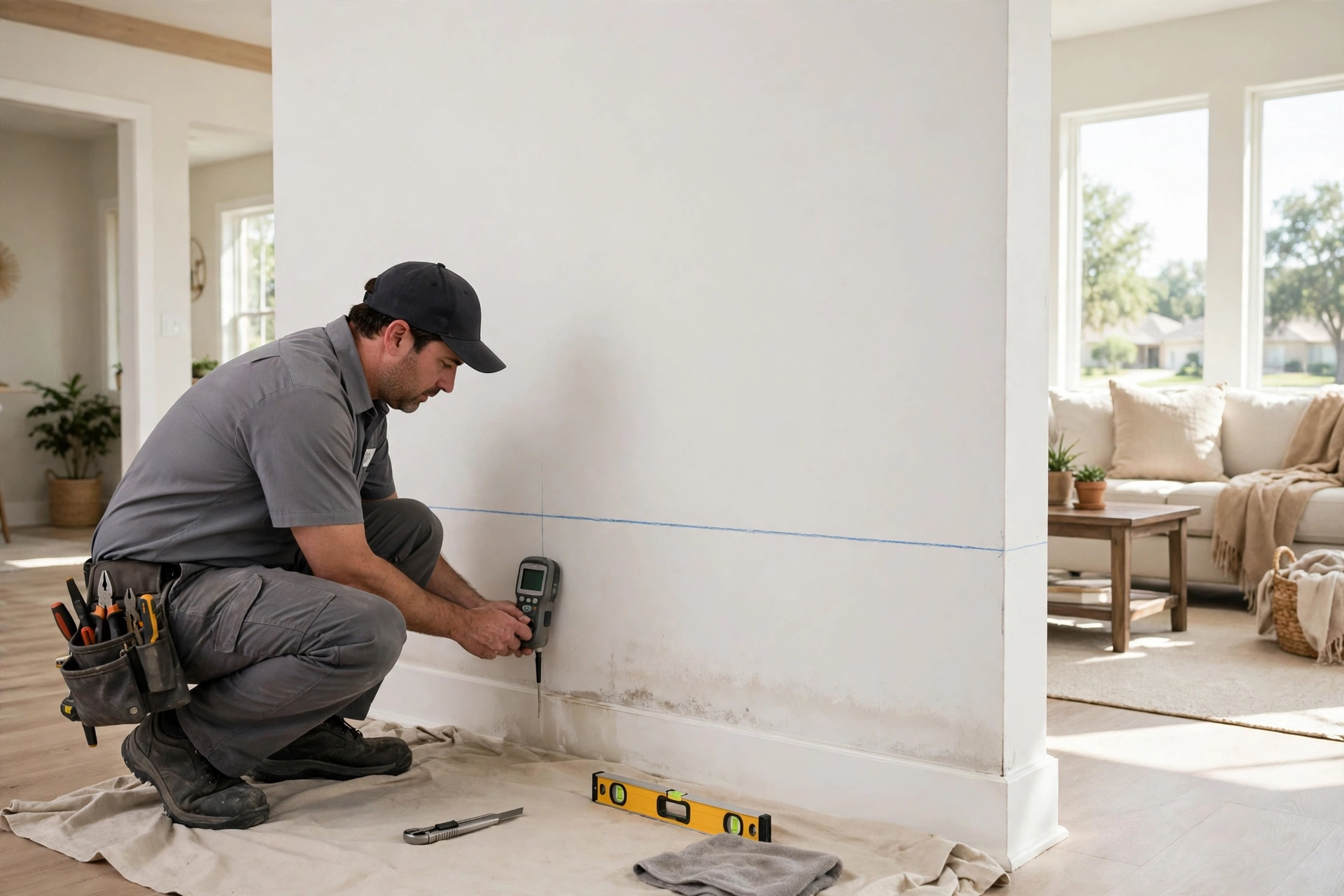
How high to cut drywall after a flood? Cut 12 to 24 inches above the highest wet reading on a moisture meter, not above the visible stain. Drywall wicks water upward, so the wet area is higher than the line you can see. The cut should land on dry gypsum, at a stud when possible. Call (469) 933-0245.
A flood cut is a straight, horizontal cut that removes the wet lower section of a wall after flooding or a serious leak. Done right, it takes out every bit of wet board and opens the wall cavity so it can dry. Done wrong — cut too low — it leaves a wet strip hidden behind the new board, and that strip quietly grows mold. This guide explains how high to cut, how we measure it, and the mistakes that turn a simple repair into a second repair.
24/7 • DeSoto, TX 75115 & 75123 • About 25 km around DeSoto
The Short Answer
How High to Cut Drywall After a Flood: The Rule
The standard rule is simple: measure the wet area with a moisture meter, then mark your cut line 12 to 24 inches above the highest wet reading. That margin is there for a reason. Water does not stop where the stain stops. It wicks upward through the paper facing and the gypsum core, climbing past the visible water line by inches — sometimes by a foot or more when the wall stayed wet for days.
Think of it this way. The stain on the paint is the receipt, not the damage. It shows where water was visible on the surface. Inside the wall, the paper backing and the gypsum have been drinking water upward the whole time. If you cut exactly at the stain, you will almost always leave wet board behind. That wet strip sits behind your new drywall, out of sight, feeding mold and softening the new board from behind.
Two feet above the floor is the height most people hear about, and it is a good starting point when the water was only a few inches deep — a washing machine hose, a toilet overflow, a few inches of storm water. But it is not a fixed rule. If flood water reached 16 inches up the wall, a 24-inch cut only gives you 8 inches of margin, and that may not be enough. If the water was contaminated, or the wall sat wet for more than 48 hours, we cut higher still. The moisture meter decides the height, not a tape measure held to the floor.
There is also a practical reason to cut at a sensible height. A flood cut at 2 feet or 4 feet lines up well with standard sheet sizes, which makes the repair cleaner and cheaper. A 4-foot cut is common when water reached about 2 feet high, because a full half-sheet fits the opening without extra seams. But convenience never comes before dryness. If the meter says the board is wet at 3 feet, we cut at 4 feet, even if it costs a little more board. A cheap cut that leaves wet board behind is the most expensive cut you can make.
Why the Stain Lies
Why the Visible Water Line Is Not the Wet Line
Drywall is gypsum pressed between two sheets of paper. Both parts love water. The paper wicks it upward fast, and the gypsum soaks it up more slowly but holds it longer. When water pools on the floor against a wall, it does not just sit there. It climbs. The bottom of the board saturates first, then the moisture moves up, inch by inch, behind the paint. From the room, you see a brown line a few inches high. Inside the wall, the wet zone can be twice that high.
Insulation makes it worse. Fiberglass batt insulation behind the board soaks up water and holds it against the drywall for days, long after the floor looks dry. Blown-in insulation can hold a surprising amount of water too. That is why a wall can feel dry on the surface and still be wet inside. Pressing the paint tells you almost nothing about what is happening in the cavity.
This is also why time matters so much. A leak caught within hours usually means a low cut, because the water has not had time to climb. A leak that ran all weekend, or flood water that stood for a day, means a much higher cut. Mold can start growing on wet drywall within 24 to 48 hours, according to the U.S. Environmental Protection Agency, so a wall that stayed wet is not just wet — it may already be growing mold on the back of the board, where you cannot see it. You can read the EPA’s mold and moisture guidance at epa.gov/mold.
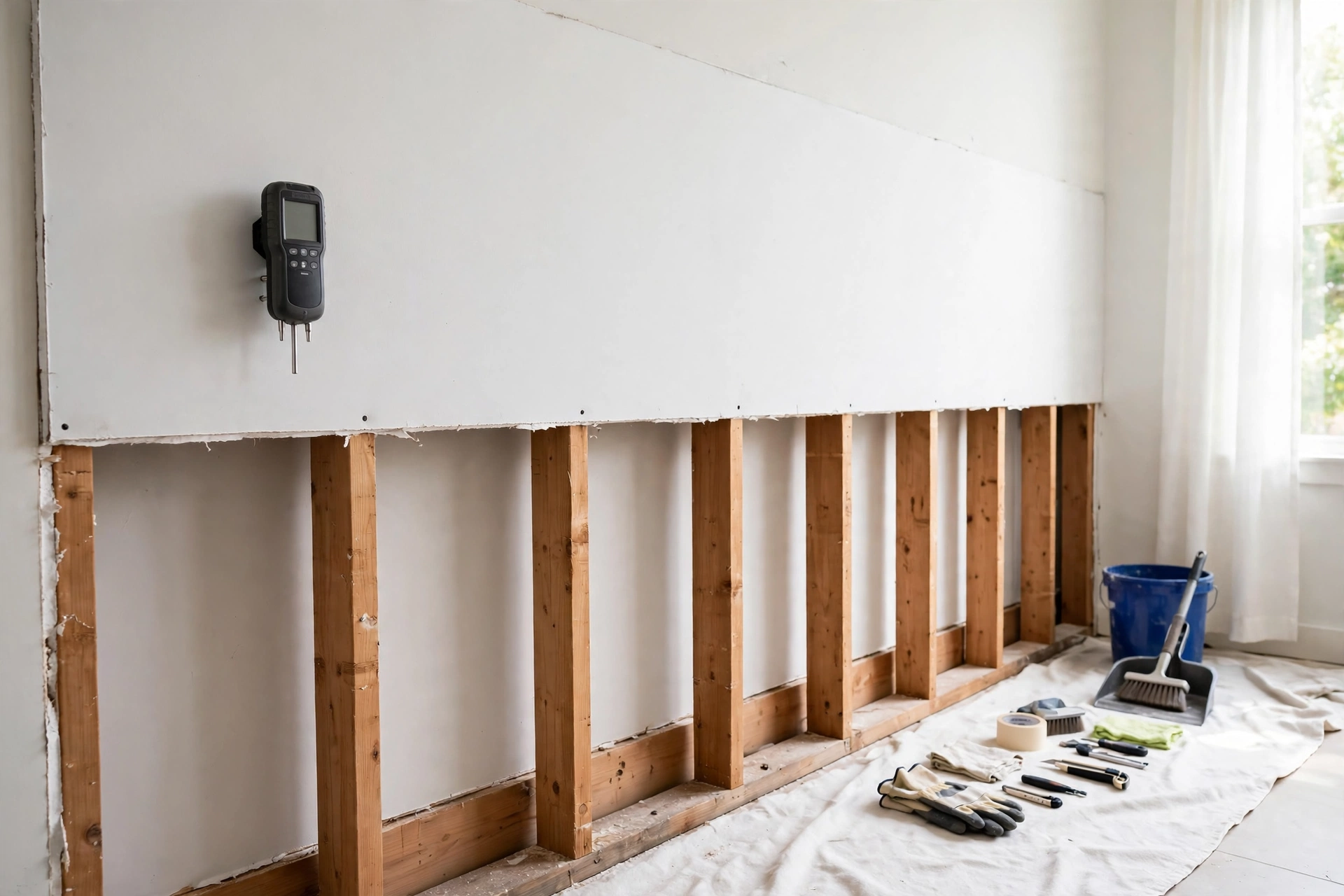
The bottom line: never trust your eyes alone. A moisture meter — pin or pinless — is the only way to know where the wet area actually ends. We take readings every few inches up the wall, across the whole affected area, and we mark the highest wet reading before we mark any cut line.
Step by Step
How We Measure and Mark a Flood Cut in DeSoto
Every flood cut we make in DeSoto follows the same order. Skipping a step is how wet board gets left behind.
1. Stop the water and get the room safe. Before anything is cut, the water source has to be stopped — the main shut off, the roof tarped, the appliance hose replaced. We also check for electrical risk. Outlets low on a wet wall can be live, and a cut that hits a wire is dangerous. If the power to the room needs to go off, it goes off first.
2. Measure with a moisture meter. We scan the wall with a pinless meter first, then confirm with pin readings. We work up the wall in small steps, and across the wall in both directions, because water does not spread evenly. A stud can block it on one side and channel it on the other. We mark the highest wet reading with a pencil line, and we keep going until we find dry board on every side.
3. Add the margin and mark the cut line. From the highest wet reading, we add 12 to 24 inches and draw a level horizontal line with a chalk line or a four-foot level. If that line falls near an electrical outlet, we raise it to clear the outlet box, which makes the repair simpler and safer. We also check where the studs are, so the cut can land at the center of a stud when possible.
4. Cut clean and straight. We score the paper face with a utility knife first, so the paper does not tear, then cut through the board with an oscillating tool. The horizontal cut runs the full width of the wet area. Vertical cuts drop to the floor at the center of studs, so the new board has solid wood to screw into on every edge.
5. Remove wet insulation and dry the cavity. Wet insulation comes out to the same height as the cut, or higher. Then air movers and a dehumidifier dry the studs and the inside of the remaining board. We do not rebuild until the cavity reads dry on the meter. In most DeSoto homes that takes 2 to 5 days, depending on how much water got in.
6. Rebuild and finish. New drywall is cut to fit, screwed to the studs, taped, mudded, and sanded. The texture is matched — knockdown, orange peel, or smooth — and the repair is primed and ready for paint. A good flood-cut repair should be invisible when it is done. If you can see the line, the finish was rushed.
Our flood-cut drywall repair service in DeSoto, TX follows this exact process on every job, and our drywall drying and moisture detection work is what makes the measurement step reliable. If you are wondering whether your wall can be saved at all, read our guide on can water damaged drywall be saved in DeSoto, TX.
Mistakes to Avoid
4 Flood Cut Mistakes That Cost DeSoto Homeowners Twice
Mistake 1: Cutting to the stain. This is the big one, and it is the reason most flood-cut repairs fail. The stain is always lower than the wet area. Cut to the stain and you leave a wet strip behind the new board. Within weeks the new board softens, the paint bubbles, and the musty smell comes back. Then the wall has to be opened again, and you pay for the same job twice.
Mistake 2: Leaving wet insulation in place. Wet insulation looks harmless once the board is off, but it holds water like a sponge and keeps the cavity damp for weeks. It also feeds mold. If the insulation is wet, it comes out. There is no way to dry it in place that is worth the risk.
Mistake 3: Rebuilding before the cavity is dry. New drywall over a damp cavity traps moisture. The studs stay wet, the back of the new board gets wet, and mold grows where no one can see it until the paint starts bubbling. The drying step feels slow — 2 to 5 days of fans running — but it is the step that makes the repair last. A moisture meter reading, not a calendar, decides when rebuilding starts.
Mistake 4: Cutting without checking for wires and pipes. The lower part of a wall is where outlets, switches, and sometimes plumbing live. A careless cut can hit a wire or a pipe and turn a drywall job into an emergency. Mark the studs, know where the outlets are, and if the wall is near a bathroom or kitchen, slow down and check first.
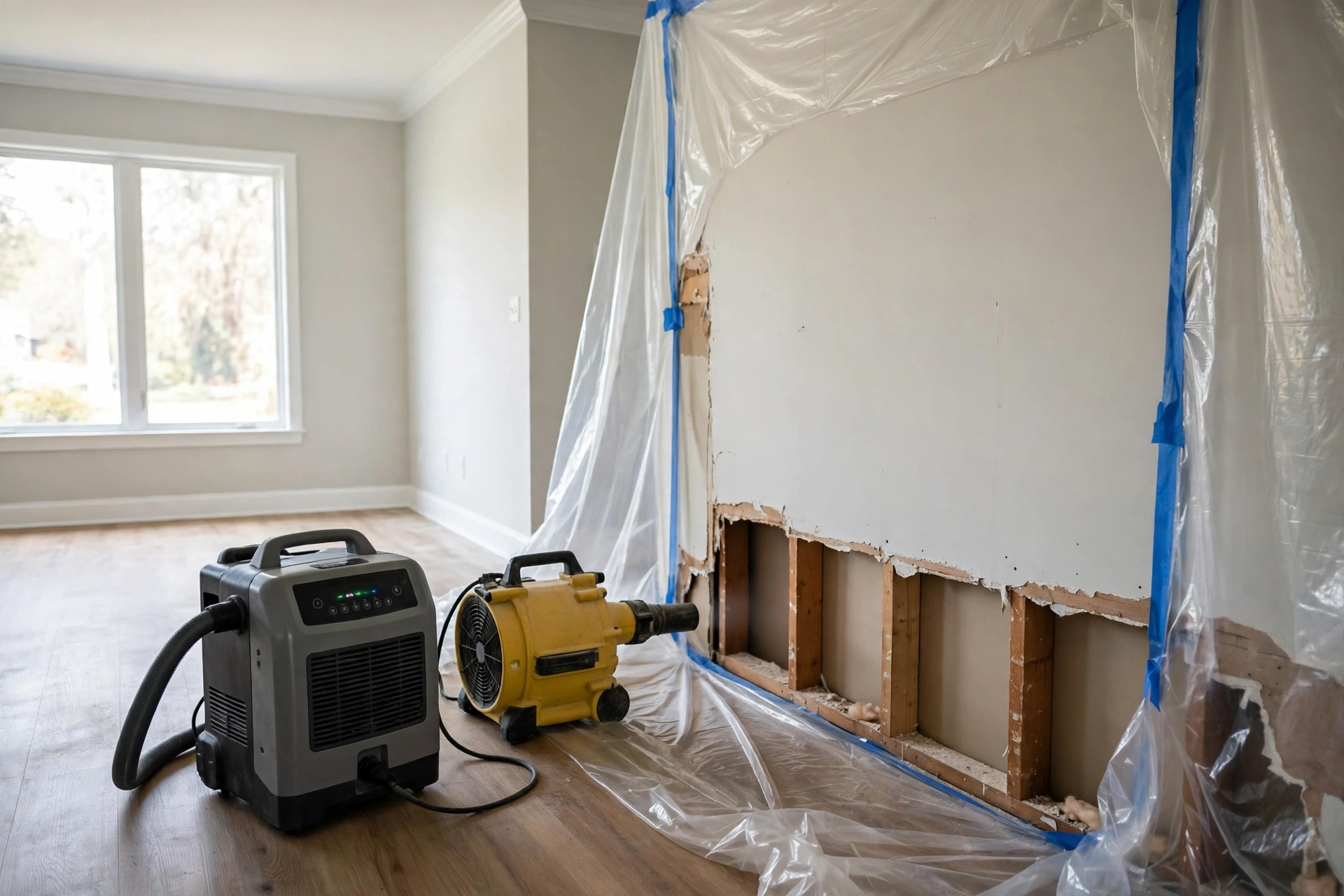
One more thing worth knowing: contaminated water changes everything. Drywall touched by sewage or flood water from outside should always come out, no matter how high the water reached, and the cut should go higher than it would for clean water. If you are not sure what kind of water you are dealing with, call (469) 933-0245 and describe it before you cut anything.
Cost
What Does a Flood Cut Repair Cost in DeSoto, TX?
These are typical U.S. ranges, not a DeSoto quote. Your price depends on how much board is wet and how high the cut has to go.
| Job | Typical U.S. range |
|---|---|
| Small flood cut, one wall section | $350 – $1,500 |
| Several walls, or a full room | $1,000 – $3,000+ |
| With wet insulation removal | Adds $200 – $800 |
| With mold involved | $2,500 – $6,000 |
What moves the price? The height of the cut matters most — a 4-foot cut uses more board and more finishing time than a 2-foot cut. Wet insulation, thick texture, and mold add time too. The drying step is usually included in the job, not billed separately. Call (469) 933-0245 for an exact quote, and read our guide on how much it costs to replace water damaged drywall in DeSoto, TX for the full breakdown.
DeSoto, TX
Flood Cuts in DeSoto, TX Homes
DeSoto sits 12 miles south of Dallas, in southern Dallas County, on I-35E and I-20. Most homes here are one-story and split-level brick homes built in the 1970s and 1980s, on slab foundations. On a slab, flood water and leak water have nowhere to go but up the wall, and the first sign is often a soft spot near the baseboard or a stain that keeps coming back after you paint it.
We work across DeSoto, in ZIP codes 75115 and 75123, and in neighborhoods including The Meadows, Thorntree, Eagle Crest, Brandonwood, Frost Farms, Amber Terrace, Hidden Lakes Estates, and Summit Parks. The causes we see most are burst pipes, roof leaks after storms, AC drain leaks, appliance hoses, and storm water around windows and doors. After a heavy Texas storm, we often see the same pattern: water came in low, wicked up the wall, and the homeowner cut to the stain — then called us when the smell came back.
If your wall got wet, do not guess the cut height. Call (469) 933-0245 and tell us how high the water reached and how long the wall stayed wet. We will measure it properly. You can also read our guide on how to tell if drywall is wet behind the wall if you are not sure the wall is wet at all. For the DeSoto area page, see water damaged drywall repair in DeSoto, TX, or visit our homepage to see all our services.
Related Articles
Keep reading — these answer the next questions most homeowners ask.
Related Services
Not sure which one you need? Call us.
FAQ
How High to Cut Drywall After a Flood — Questions We Hear in DeSoto
How high to cut drywall after a flood?
Cut 12 to 24 inches above the highest wet reading on a moisture meter, not above the visible stain. Drywall wicks water upward, so the wet area inside the wall is higher than the stain you can see. The cut should land on dry gypsum, at the center of a stud when possible.
Can I just cut to the visible water line?
No. The visible water line shows where water stopped showing on the surface, not where it stopped inside the wall. Cutting to the stain leaves a wet strip behind the new board, where mold can grow unseen. Always measure with a moisture meter first.
Is a 2-foot flood cut always enough?
Not always. Two feet above the floor is a common height when water was only a few inches deep, but if the water was deeper, or the wall stayed wet for days, the wet area can reach higher. The moisture meter reading decides the height, not a fixed number.
Does wet insulation come out with the drywall?
Yes. Wet insulation holds water long after the board feels dry, and it keeps feeding moisture back into the wall. It should be removed to the same height as the flood cut, or higher, and the cavity dried before new board goes in.
How long after a flood cut before new drywall goes in?
Only after the wall cavity reads dry on a moisture meter. With air movers and a dehumidifier, that usually takes 2 to 5 days. Hanging new board over a damp cavity traps moisture and the repair can fail within months.
Need Help?
Call DeSoto Drywall Pros for Your Flood Cut
How high to cut drywall after a flood is not a guessing game. Measure the wet area, add 12 to 24 inches above the highest wet reading, cut on dry board at a stud, take out the wet insulation, and dry the cavity before you rebuild. That is the whole job, and it is the difference between a repair that lasts and one you pay for twice. If your wall got wet in DeSoto, TX, call (469) 933-0245 now — tell us how high the water reached and how long the wall stayed wet, and we will measure it properly and cut it right the first time. We answer 24/7.