
DeSoto Drywall Blog • November 6, 2026 • DeSoto Drywall Pros
How Long Does Drywall Take to Dry After Water Damage in DeSoto, TX?
How long does drywall take to dry after water damage? Usually 2 to 5 days with air movers and a dehumidifier, if the board is sound and the water was clean. Without drying equipment it can take a week or more. Heavily soaked, sagging, or moldy drywall should be cut out instead of dried.
The wall feels dry to the touch on day two, so the job must be done, right? Not always. The surface of drywall dries far faster than the inside of the wall, and that gap is where most bad repairs come from. This guide explains what actually sets the drying time, and how to know when a wall is really dry.
24/7 • DeSoto, TX 75115 & 75123 • About 25 km around DeSoto
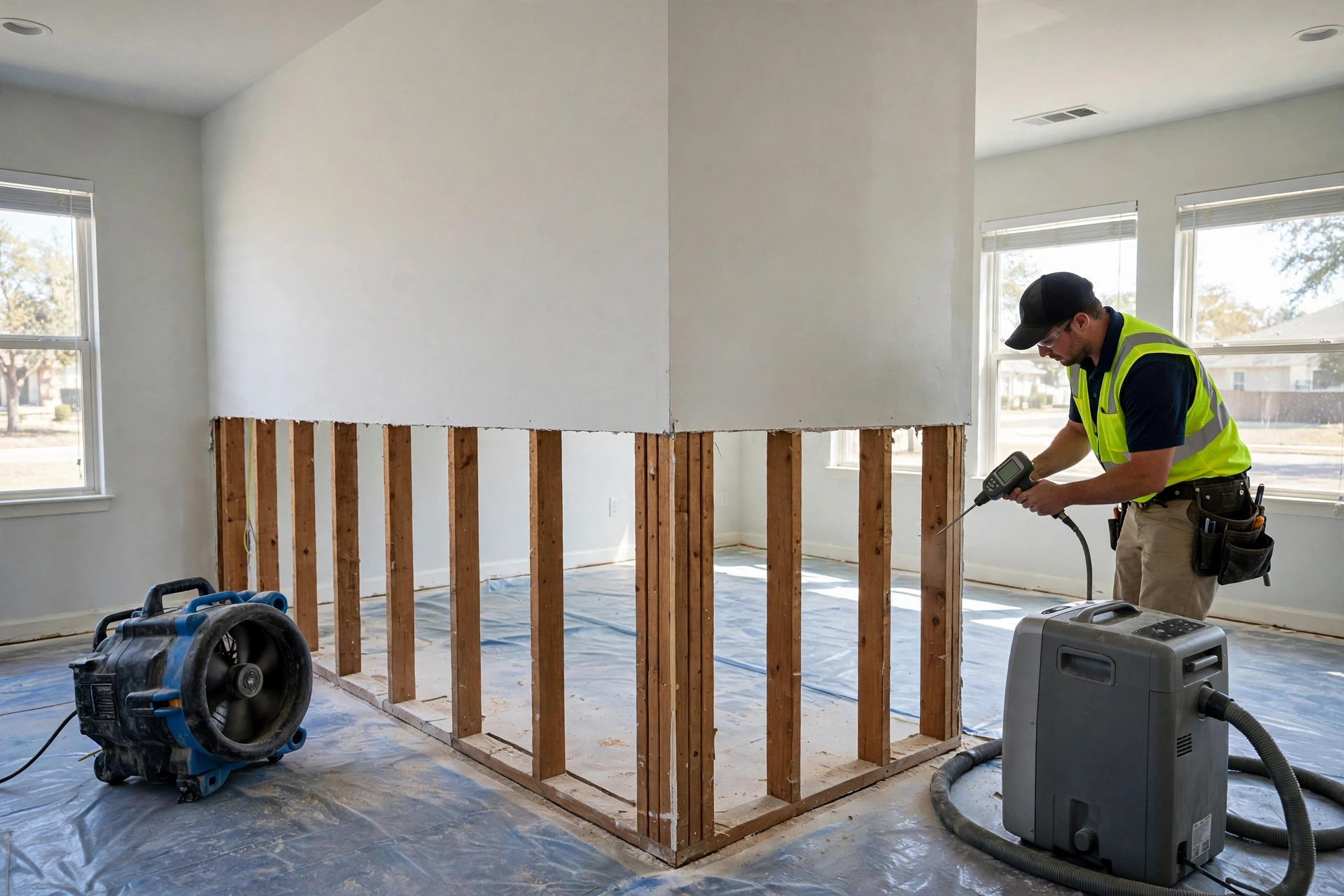
Drying Times
How Long Does Drywall Take to Dry After Water Damage?
There is no single number, because drying time depends on how much water got in. A board that caught a small splash is a different job from a board that sat in standing water for a day. The table below gives the ranges we work with. They assume the leak is fixed first. Nothing dries while water is still coming in, so step one is always stopping the source: shut the water off, fix the pipe, or tarp the roof.
| How wet the drywall got | With air movers + dehumidifier | Left to dry on its own |
|---|---|---|
| Light: small splash, surface damp, board still firm | 24 to 72 hours | 3 to 7 days |
| Moderate: leak ran for hours, board damp through, firm | 2 to 5 days | 1 to 2 weeks |
| Heavy: soaked, soft, swollen, or wet insulation behind it | 5 to 7 days, often removed instead | Weeks, and often never fully |
| Dirty water (sewage, floodwater) or visible mold | Do not dry — remove it | Do not dry — remove it |
The most common case in DeSoto is the middle row: a pipe or roof leak that ran for a few hours before anyone noticed, and a board that is damp right through but still firm. With professional drying equipment, that wall usually takes 2 to 5 days. The equipment matters more than most people think. A household fan moves air across the surface. An air mover pushes air into the wall cavity, and a dehumidifier pulls the moisture out of the air so the wall can keep releasing it. Without that combination, drying stalls: the air in the room gets damp, and the wall stops drying.
One warning about the clock. The U.S. Environmental Protection Agency advises drying water-damaged materials within 24 to 48 hours to help prevent mold growth. That window is about starting the drying, not finishing it. A wall that starts drying on day one can still take four more days to finish, and that is fine, because the moisture is being pulled out the whole time. A wall that sits untouched for three days before anyone starts is a different story. By then mold may already be growing on the back of the board, where you cannot see it.
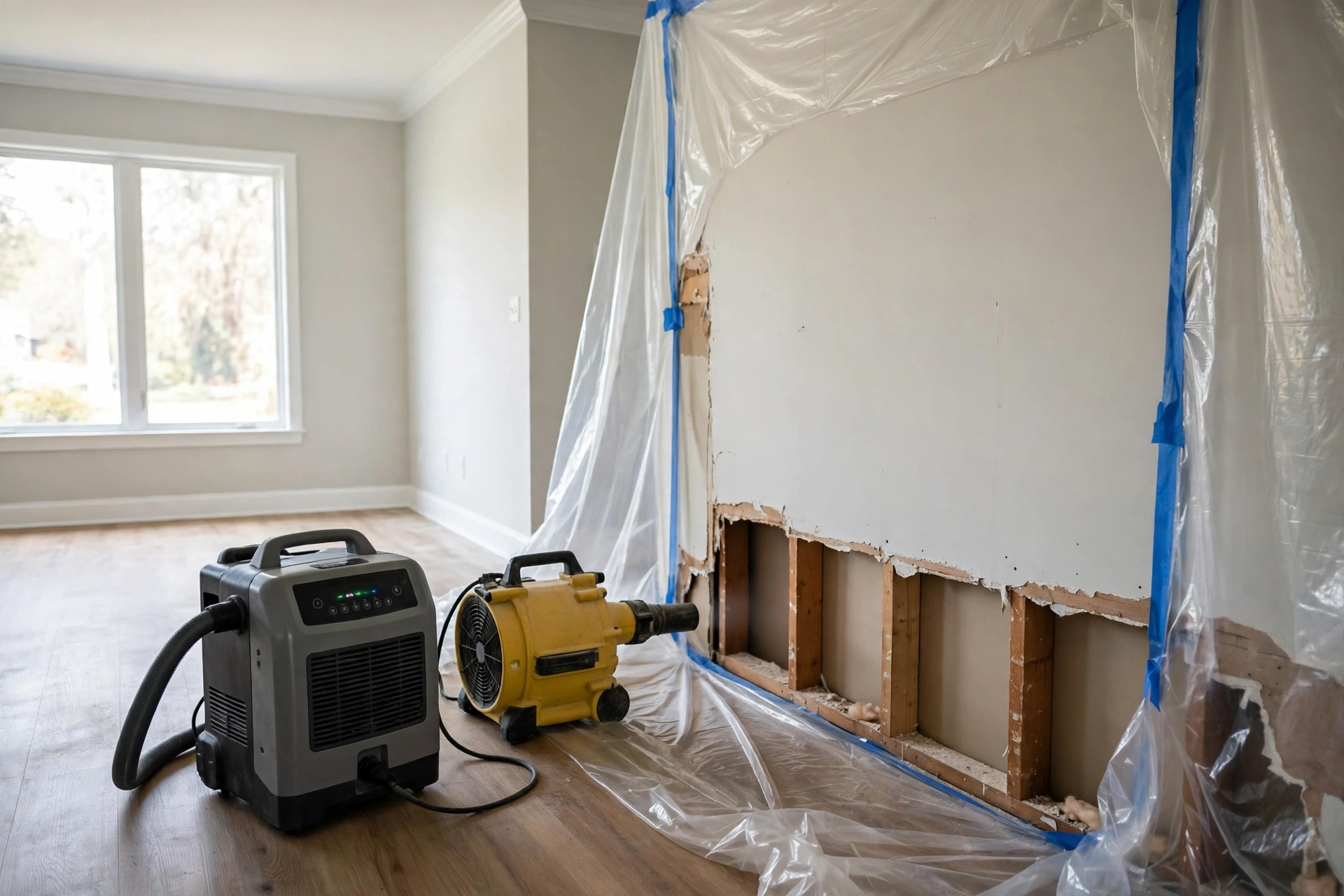
What Slows Drying Down
What Makes Drywall Dry Slower?
Five things decide whether your wall dries in two days or in seven. Knowing them helps you understand the estimate you are given, and why a neighbor's wall dried faster than yours.
- How much water got in. A board that wicked water up from the floor is wetter than a board with a stain from a ceiling drip. More water means more days. There is no shortcut around this one.
- Wet insulation behind the board. Fiberglass and cellulose insulation hold water like a sponge. When insulation is wet, it keeps feeding moisture back into the board for days. Wet insulation usually comes out with the wet board, and the wall dries much faster once it is gone.
- A closed wall cavity. Drywall dries from the surface, but the back of the board and the studs behind it can only dry if air reaches them. That is why a flood cut — removing the lower section of board — is often part of drying, not just part of replacement. It opens the cavity so air can get in. Read our guide on how high to cut drywall after a flood to see how the cut height is decided.
- Humidity and temperature. Drywall dries fastest in warm, dry air. In a humid DeSoto summer, the air is already holding moisture, so the wall gives its water up more slowly. A dehumidifier matters most in exactly these conditions. Cold air slows drying too, which is why winter pipe leaks in an unheated room take longer.
- Paint and wallpaper. A painted surface slows drying, because moisture has to pass through the paint film. Vinyl wallpaper is worse: it is almost waterproof, so moisture gets trapped behind it. In those cases the paint or paper sometimes has to come off before the wall can dry properly.
If several of these apply at once — a heavy soak, wet insulation, a closed cavity, and a humid week — the honest answer is that drying may not be worth it. At that point, cutting the board out and starting fresh is faster and cheaper than running equipment for a week on a board that may still fail. We will tell you that honestly before we start, not after a week of drying bills.
The Hidden Trap
Why a Dry Surface Does Not Mean a Dry Wall
This is the single most important idea in this article. Drywall dries from the outside in. The painted face can feel bone dry while the back of the board, the insulation, and the studs are still wet. Touch tells you almost nothing about the inside of the wall, and a wall that is closed up while the cavity is wet is a wall that will grow mold, crack its seams, and smell musty within months.
That is why professionals measure instead of touching. A pinless moisture meter scans the surface without damage, and a pin meter reads deeper into the board. We take readings from the wet area and compare them with dry board in the same house, in the same room if possible. The wall is dry when the readings match, and when a second check a day later gives the same result. One good reading is not enough, because a wall can read dry on the surface while the cavity is still releasing moisture.
If you are checking a wall yourself, here is a simple rule: press the board, knock on it, and smell the room. Firm, hollow-sounding, and no smell is a good sign. Soft, dull-sounding, or musty is not. But none of those tests replaces a meter, and if the wall was wet for more than a day, get a reading before you paint over it. Painting over a damp wall traps the moisture inside. The paint may look fine for a month, and then the stain bleeds through, the tape bubbles, or the musty smell comes back.
Our drywall drying and moisture detection service follows this order: find the leak and fix it, map the wet area with a meter, open the cavity if it needs air, run air movers and a dehumidifier, and check readings until they hold steady. Only then does the rebuild start.
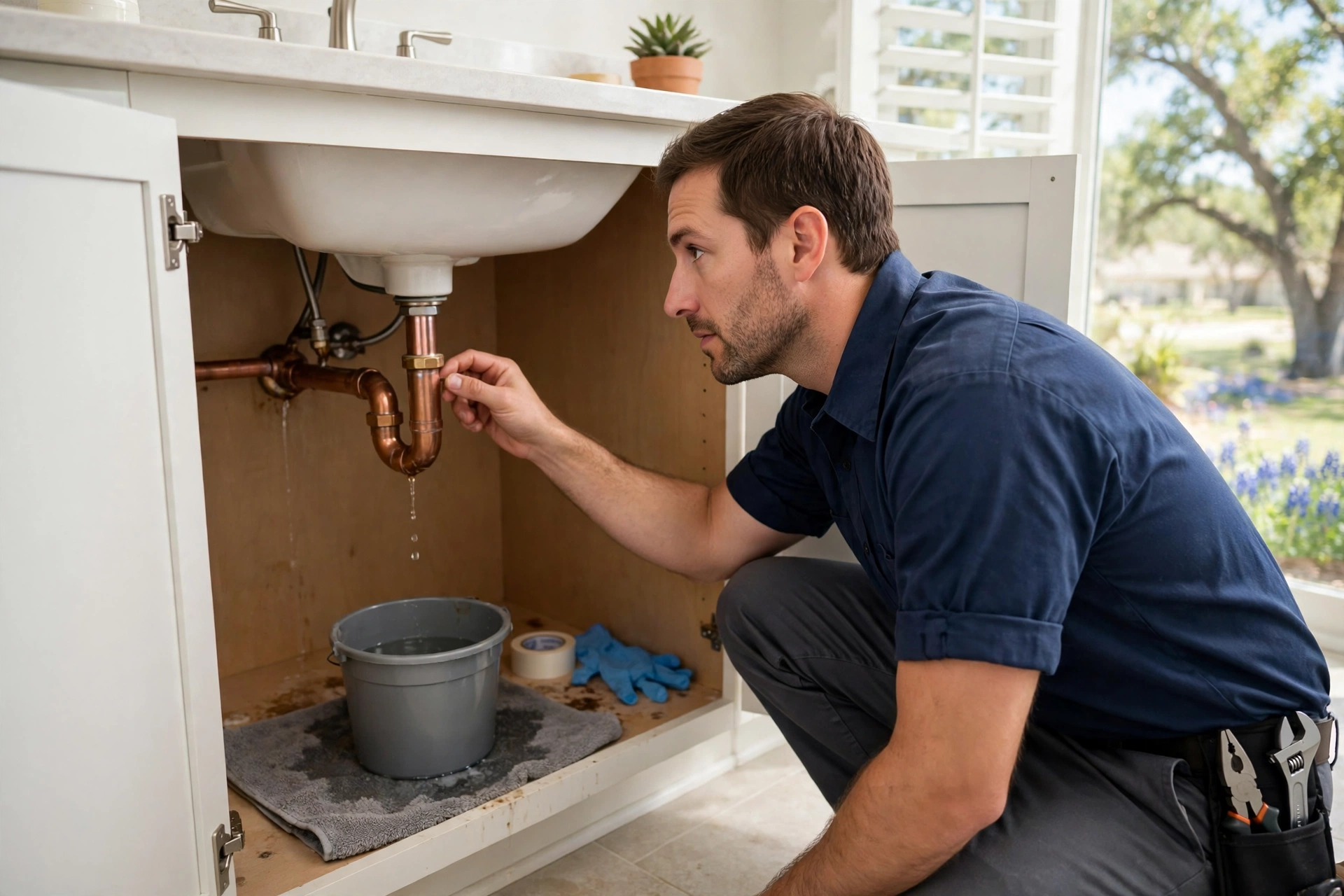
What to do while the wall is drying
Keep the equipment running. Air movers and dehumidifiers are noisy, and the temptation is to switch them off at night. Do not. Drying works by keeping dry air moving over the wet surface around the clock. Every hour the equipment is off, the wall starts reabsorbing moisture from the room air, and the clock resets.
Keep the room warm and closed up while the dehumidifier runs, and keep furniture and boxes away from the wet wall so air can reach it. Do not paint, do not hang new board, and do not put the baseboards back until the readings say the wall is dry. If the smell gets worse while the wall is drying, call us. A musty smell that grows stronger usually means there is wet material somewhere the air is not reaching, often wet insulation behind the board.
Wall Still Wet After a Few Days?
Call us and tell us what happened. We will measure the wall, tell you how long drying should take, and be honest if replacement is the faster option.
📞 Call (469) 933-0245 NowOur Process
How We Dry a Wall in DeSoto, TX
Stop & Measure
Fix the leak, then map the wet area with pin and pinless moisture meters. The real wet area is usually bigger than the stain.
Open It Up
If the cavity needs air, we cut a clean line above the wet area and take out wet insulation, so air can reach the studs.
Dry It
Air movers and a dehumidifier run around the clock. We check readings daily until they match dry board in the same house.
Rebuild
New board is hung, taped, mudded, sanded, textured to match, and primed — ready for paint.
If the board cannot be saved, the same visit turns into a removal job, and you do not pay for a week of drying first. That is the honest way to run it: measure first, dry what can be dried, and replace what cannot. Our guide on whether water damaged drywall can be saved explains the three checks that decide it.
DeSoto, TX
How Long Does Drywall Take to Dry After Water Damage in DeSoto, TX?
DeSoto sits 12 miles south of Dallas, in southern Dallas County, on I-35E and I-20. Most homes here are one-story and split-level brick homes built in the 1970s and 1980s, on slab foundations. In these homes, a leak spreads sideways along the slab and wicks up the wall, so the wet area is often wider than the stain and the bottom of the wall is the wettest part.
DeSoto summers add a real factor to drying time. Hot, humid air holds moisture, and a wall dries more slowly when the air around it is already damp. That is why a dehumidifier is not optional here in July and August: without one, the wall and the room air reach a balance and drying stalls. In winter, the opposite problem shows up. A pipe that bursts in a cold snap soaks a wall that then sits in a cold, closed-up house, and cold air dries it slowly too. Either way, the answer is the same: measure with a meter, run the right equipment, and do not close the wall until the readings hold steady.
We work across DeSoto, in ZIP codes 75115 and 75123, and in neighborhoods including The Meadows, Thorntree, Eagle Crest, Brandonwood, Frost Farms, Amber Terrace, Hidden Lakes Estates, and Summit Parks. The causes we see most are burst pipes, roof leaks after storms, AC drain leaks, and appliance hoses. For the full picture, see our water damaged drywall repair in DeSoto, TX page.
The drying window in this article follows the U.S. Environmental Protection Agency guidance on mold and moisture in the home, which you can read at epa.gov.
FAQ
How Long Does Drywall Take to Dry? Questions We Hear in DeSoto
How long does drywall take to dry after water damage?
Usually 2 to 5 days with air movers and a dehumidifier, if the board is sound and the water was clean. Lightly wet drywall can dry in 24 to 72 hours. Without drying equipment it can take a week or more, and heavily soaked board is usually removed instead of dried.
Can drywall dry on its own after a leak?
A small splash that dries within hours is usually fine. A wall that soaked up water from a leak will not dry fast enough on its own. Inside a closed wall cavity, with no airflow, it can stay damp for weeks, which is long enough for mold to start.
How do you know when drywall is dry?
With a moisture meter. We compare readings from the wet area against dry board in the same house, and we check inside the wall cavity, not just the surface. The wall is dry when the readings match and stay steady over two checks.
Does wet drywall always need to be replaced?
No. Drywall that stayed firm, met clean water, and dried within about 24 to 48 hours can often be saved. Drywall that is soft, sagging, moldy, or soaked by dirty water almost always needs to be cut out and replaced.
How long before wet drywall grows mold?
Mold can start growing on wet drywall within 24 to 48 hours, according to the U.S. Environmental Protection Agency. That is why drying should start as soon as the leak is fixed, and why a wall that has been wet for days is usually checked for mold before it is closed up.
How long does drywall take to dry after water damage in your home? It depends on how wet the wall got, and the only way to know is a moisture reading. Call DeSoto Drywall Pros at (469) 933-0245 — we answer 24/7, we will measure the wall and give you an honest drying time, and if the board cannot be saved, we will cut out only what is wet and rebuild it paint-ready.